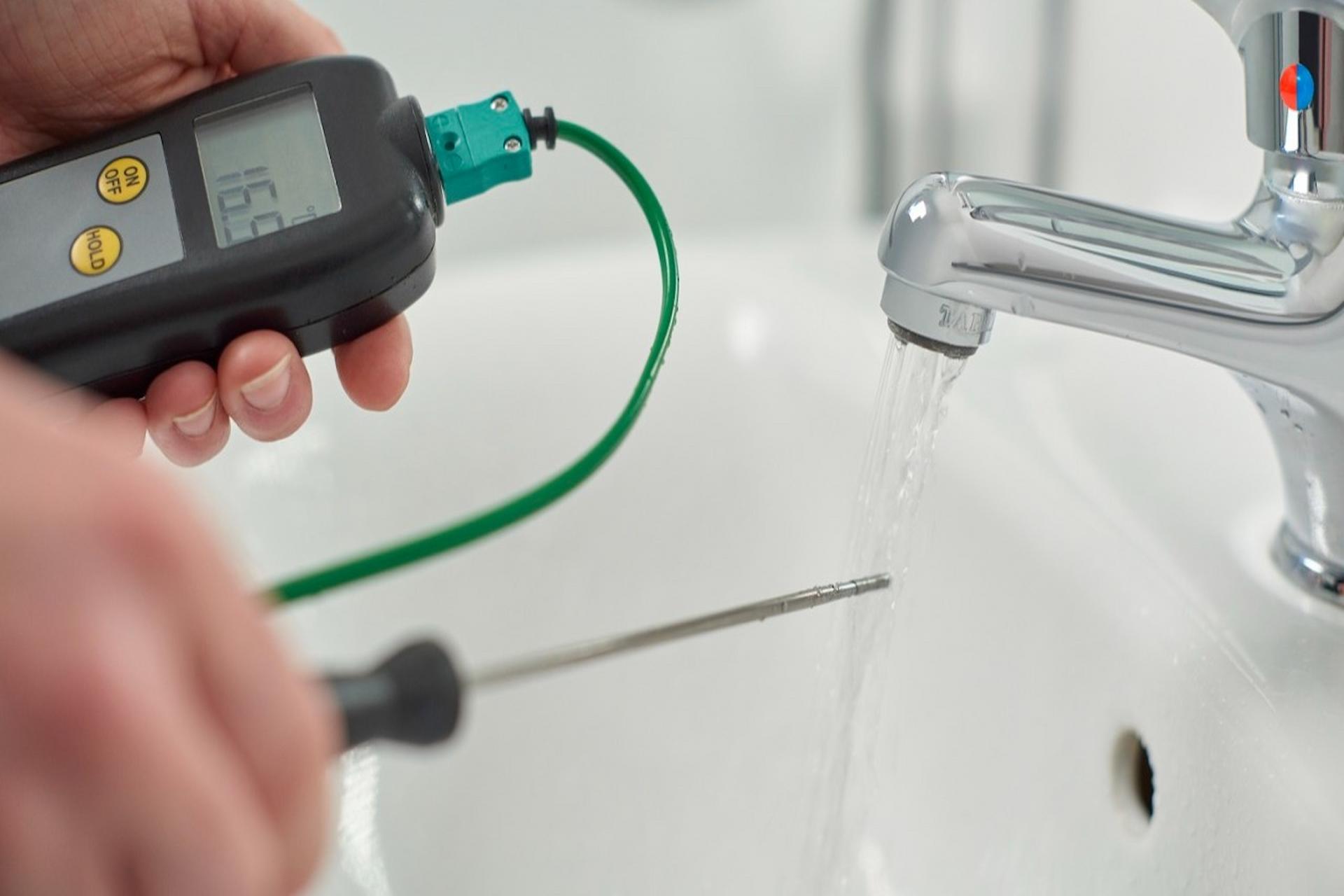
Legionella risk assessment companies play a crucial role in protecting public health from Legionella, a bacterium which can cause legionnaires’ disease through the inhalation of contaminated water droplets. Many business owners aren’t aware that they’re legally required to conduct these assessments under the Health and Safety at Work Act (1974) and COSHH regulations.
These bacteria thrive in water temperatures between 20°C and 45°C, making proper management of water systems essential for prevention. Professional legionella risk assessments can include comprehensive site surveys, water sampling, and documentation of all water systems, ensuring your business remains compliant with industry standards. Furthermore, non-compliance can lead to significant legal consequences, including substantial fines and damage to your reputation, particularly if an outbreak occurs due to negligence.
In this article, we’ll explore what legionella is and the risk that it poses, why Legionella risk assessment services are so important and the many benefits that can be gained by utilising the help of a professional legionella risk assessment company to carry them out.
The Hidden Risks of Legionella in Business Environments
Many business owners remain unaware of the hidden Legionella risks lurking within their everyday water systems. Legionella bacteria naturally occur in freshwater environments, but once inside building water systems, they can multiply to dangerous levels if the conditions are favourable.
The bacteria thrive in specific circumstances that are surprisingly common in commercial properties. Any water system can become a source for Legionella growth when temperatures fall between 20–45°C, water becomes stagnant, or nutrients like rust, sludge, and biofilms are present. Moreover, research has shown that Legionella pneumophila can travel several kilometres from its source through airborne spread, extending the risk beyond the immediate vicinity.
Certain business sectors face heightened risks. Healthcare facilities naturally include people at greater risk of developing Legionnaires’ disease. Manufacturing and industrial sites often contain cooling towers and complex water processing systems that pose significant challenges for Legionella control. Additionally, hospitality businesses with spa pools, hot tubs, and seasonal occupancy patterns face unique water management challenges.
Beyond the obvious sources, Legionella risks exist in unexpected places – decorative fountains, emergency shower systems, air-conditioning units and even routine actions like flushing toilets can create potentially infectious aerosols.
For businesses, the consequences extend beyond health concerns. If an outbreak occurs due to inadequate risk management, companies face potential legal action, business closure, and significant reputational damage. Hence, identifying and addressing these hidden risks through professional assessment becomes not just a legal obligation but a business necessity.
Why Professional Legionella Risk Assessments Are Critical
Understanding the importance of professional Legionella risk assessments extends far beyond standard compliance measures.
- The Health and Safety Executive (HSE) specifically recommends that organisations conduct regular risk assessments to identify potential sources of Legionella contamination in their water systems.
- Professional assessments are essential because Legionella bacteria cause numerous outbreaks annually, affecting both public health and economic stability. According to HSE guidance, while some property owners believe they can handle assessments themselves, complex water systems require expert evaluation. The HSE’s Approved Code of Practise L8 provides comprehensive guidelines that qualified professionals are trained to implement effectively.
- Competence is the cornerstone of proper assessment. The HSE stipulates that duty holders must “appoint a competent person with sufficient authority and knowledge” to implement necessary control measures. Without appropriate expertise, critical risks may go undetected, potentially leading to serious health consequences or regulatory penalties.
- The consequences of inadequate assessment can be severe. Failure to comply with Legionella control regulations can result in significant penalties, including substantial fines and imprisonment. More critically, should a tenant or employee contract Legionnaires’ disease, landlords and employers may face prosecution under the Health and Safety at Work Act.
Essentially, professional risk assessments deliver several crucial advantages:
- Early detection and prevention of Legionella outbreaks, safeguarding public health and ensuring compliance with legal standards
- Documented evidence of due diligence, protecting organisations against potential litigation
- Expert interpretation of results beyond what DIY kits can provide
- Peace of mind that all steps are being taken to minimise risks, especially in complex or high-risk environments
Professional assessors bring systematic approaches to evaluation, examining potential problem areas that untrained individuals might overlook. Consequently, what might initially seem like an unnecessary expense actually constitutes essential protection against far costlier outcomes – both financial and human.
For this purpose, hiring a reputable, qualified professional helps to ensure that your legionella risk assessment procedures remain in safe hands.
Long-term Benefits of Hiring a Legionella Risk Assessment Company
Beyond immediate compliance requirements, investing in a professional legionella risk assessment company delivers numerous long-term advantages for your business. Industry experts such as the team at Swiftclean provide invaluable support to organisations across the UK. These benefits extend far beyond the initial assessment phase, creating lasting value throughout your operation.
- First, engaging certified experts ensures proper risk management whilst providing documented evidence of due diligence. This documentation serves as critical protection should litigation ever arise following a suspected outbreak. Indeed, records maintained by professional services demonstrate your ongoing commitment to safety standards, which can be invaluable if questions about compliance emerge in the future.
- Over time, professional assessments contribute significantly to operational efficiency. Well-maintained water systems function more optimally, reducing energy costs and preventing unexpected repairs or shutdowns. This proactive approach allows businesses to avoid costly disruptions that might otherwise impact productivity.
- Protecting your organisation’s reputation represents another substantial long-term benefit. Legionnaires’ disease outbreaks receive considerable media attention, with potential reputational damage being severe. Through regular professional assessments, you showcase your commitment to health, safety, and environmental responsibility – positioning your company as trustworthy and responsible.
- Selecting the right partner is paramount for maximising these benefits. Companies that are members of the Legionella Control Association provide additional reassurance through their adherence to rigorous standards. These professionals conduct regular site visits, review assessments as needed, analyse trends, and perform annual reviews of your overall control strategy.
- Many professional assessment companies also offer comprehensive staff training, covering essential topics like:
- Understanding Legionella health risks
- Identifying potential hazards in water systems
- Maintaining good water hygiene practises
- Emergency response procedures for suspected outbreaks
Through knowledge transfer, your team gains valuable expertise that enhances your overall safety culture. Altogether, these advantages create a compelling case for professional assessment services – transforming what might initially seem like a regulatory burden into a strategic investment that safeguards both people and your business reputation for years to come.